Commencement of Minimum Wages of RM1,700
From 1 August 2025, all employers without exception must comply with the minimum wage order of RM1,700 per month including those who previously enjoyed the deferment period. This applies to non-citizen workers and contract apprentices but does not apply to domestic workers. For employers with fewer than five employees, a six-month deferment period was granted which will end on July 31. Failing to comply with the Minimum Wage Order is an offence under the National Wages Consultative Council Act 2011. If convicted, employers may be fined up to RM10,000 per employee, with an additional fine of RM1,000 for each day the offence continues after conviction. For repeat offences, the maximum fine can reach RM20,000 or imprisonment for up to five years.
If your company has any legal issue relating to employment, industrial relations or trade unions, please do not hesitate to CONTACT ETCoLaw.
22 July 2025
Commencement of EPF Contributions for Non-Malaysian Employees
In a statement on 25 June 2025, the EPF announced that EPF contributions for non-Malaysian employees will begin in November 2025 in respect of salaries paid in October 2025. The contribution rates are set at 2% each for the employer and employee. The extended mandatory contributions cover all non-Malaysian citizen employees working in Malaysia (excluding domestic servants*) who hold a valid passport and an employment pass issued by the Immigration Department of Malaysia. The extended contributions will likely increase the costs of hiring foreign workers in the manufacturing, agriculture, and services sectors, among others, and, hence, the costs of doing business. The extended contributions may also affect the relative attractiveness of hiring Malaysian and foreign employees.
*According to Section 3 of the Workmen’s Compensation Act 1952, ‘domestic servants’ are individuals who work as, among others: Maids, Cooks, Gardeners, Cleaners, Babysitters, Drivers and others.
26 June 2025
Stamping of Employment Contracts
According to the media statement released by the Lembaga Hasil Dalam Negeri Malaysia (Inland Revenue Board of Malaysia), employment contracts that are required to be stamped are as follows:
- Employment contracts concluded before 1 Jan 2025 are exempted from stamping.
- Employment contracts concluded from 1 Jan 2025 to 31 Dec 2025 are required to be stamped though exempted from late-stamping penalty.
- Employment contracts concluded from 1 Jan 2026 are required to be stamped, and penalty will be imposed for late-stamping.
The stamp duty amount is RM10.00 per contract.
Source: HASiL/2025/06/06 – 50
9 June 2025
EPF Contribution Rates for Foreign Labourers
According to some news reports, the government has decided to fix the EPF contributions by foreign labourers and their employers at the same rate, namely, 2% each party.
The news reports are, however, subject to the amendments to the Employees Provident Fund Act 1991, which are expected to be presented to Parliament in the current session.
If your company has any legal issue relating to employment, industrial relations or trade unions, please do not hesitate to CONTACT ETCoLaw.
3 February 2025
1:3 Internship Policy
The Malaysian government has announced the implementation of the 1:3 Internship Policy. Under the Policy, companies (which are not limited to foreign companies) that have been granted Expatriate Employment Passes (EP) under the Malaysia Expatriate Service Centre (MYXpats) and Malaysia Digital Economy Corporation (MDEC) are required to offer up to 3 internship or work place learning placements to Malaysians. The number of placements to offer depends on the class of EP issued, as follows:
EPI: 3 placements for each EP1 issued
EPII: 2placements for each EP1 issued
EPIII: 1 placements for each EP1 issued
The pilot programme will run from 15 February 2025 to 31 December 2025. The official implementation will start on 1 January 2026.
The internships to offer must offer quality structured internship placements with a minimum duration of 10 weeks, pay at least RM500 a month to each intern, and get the endorsement of the structured internship programme from TalentCorp.
Despite the introduction of the Policy, any EP application. duration and approval requirements for EP are not affected. Companies applying for EP are not required to submit proof of meeting the Policy requirements. Companies implementing the Policy will enjoy double tax reliefs on expenses incurred on the interns. No penalty, however, will be imposed for non-compliance with the Policy.
Certain exemptions apply to the Policy.
If your company has any legal issue relating to employment, industrial relations or trade unions, please do not hesitate to CONTACT ETCoLaw.
3 February 2025
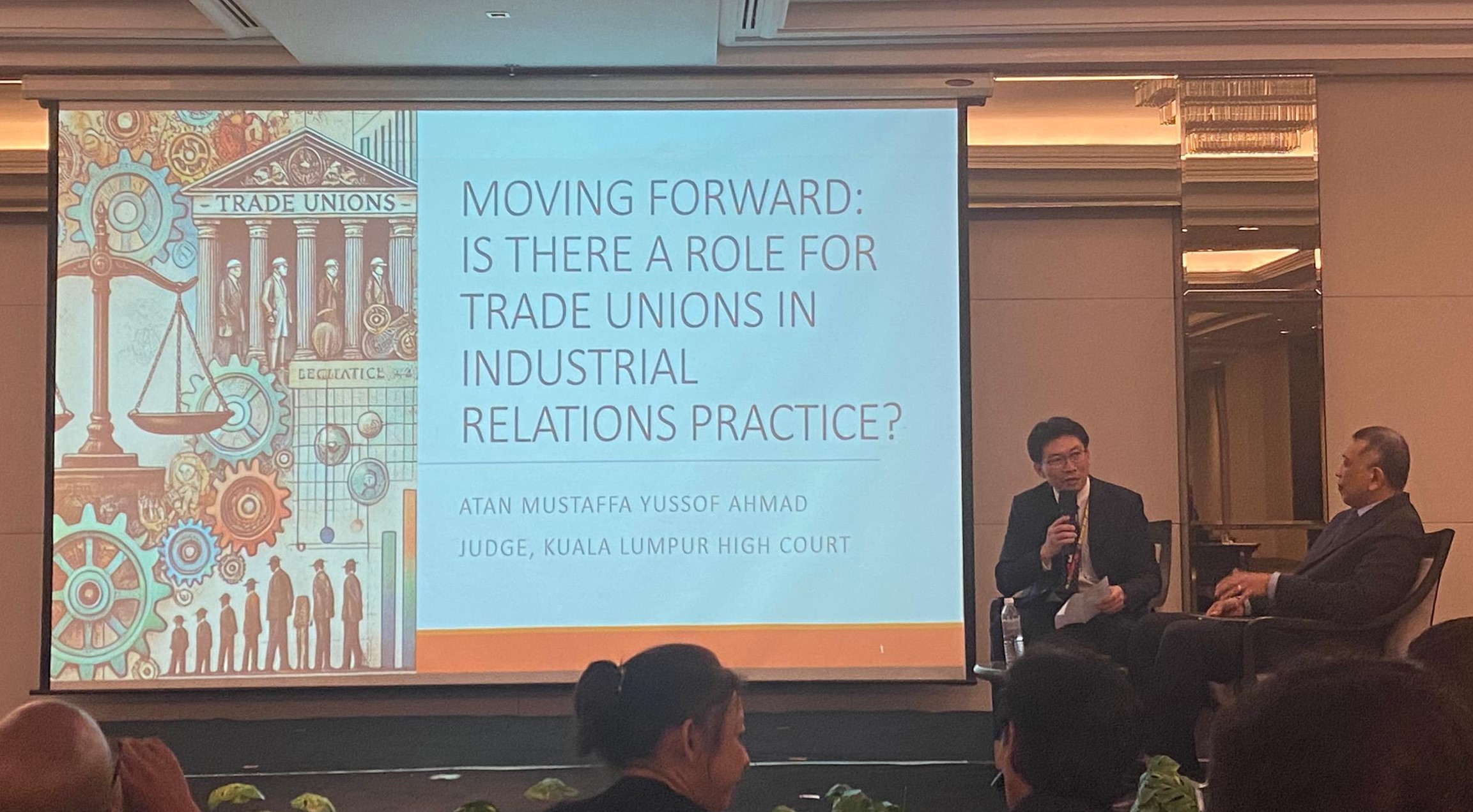
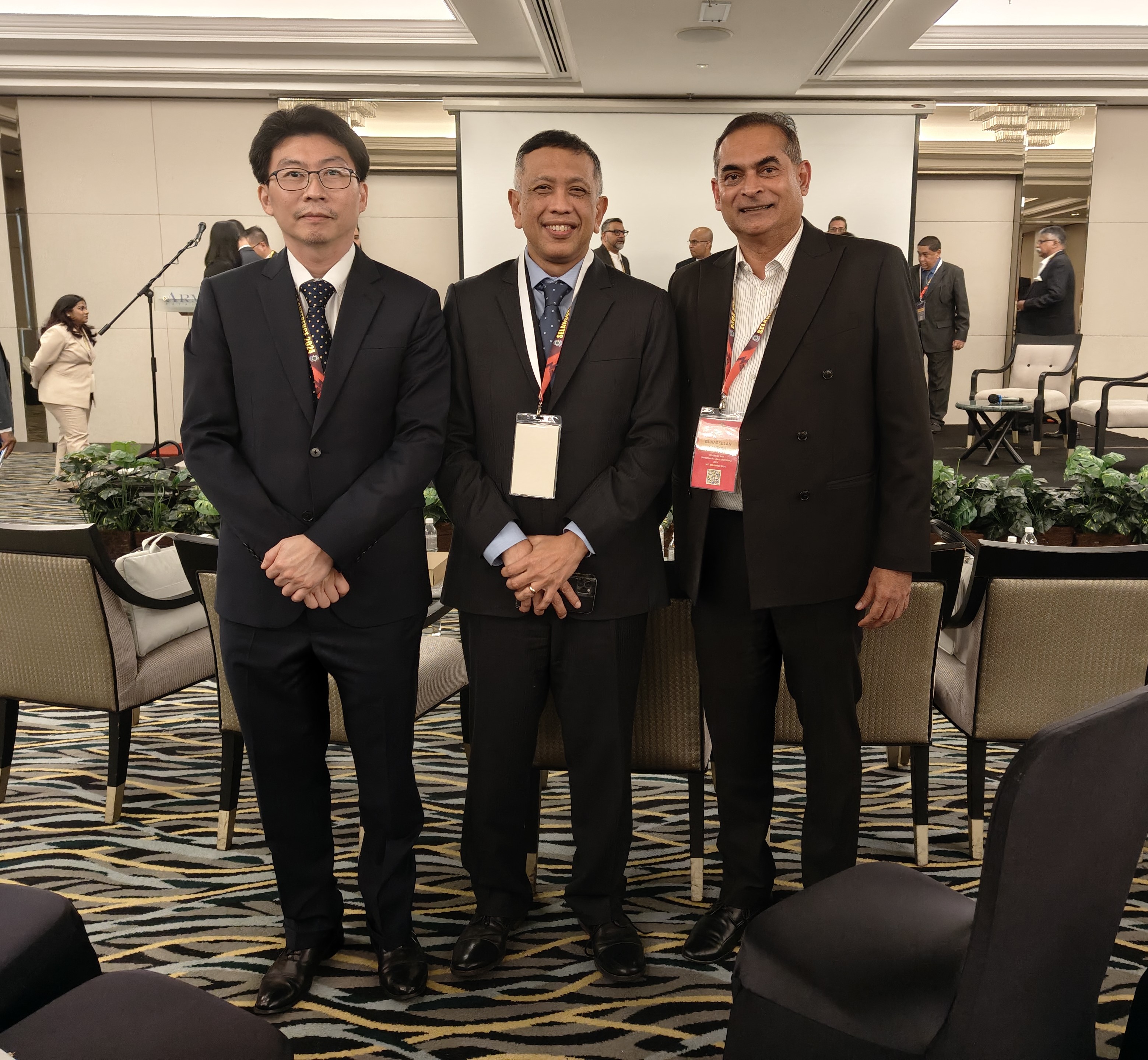
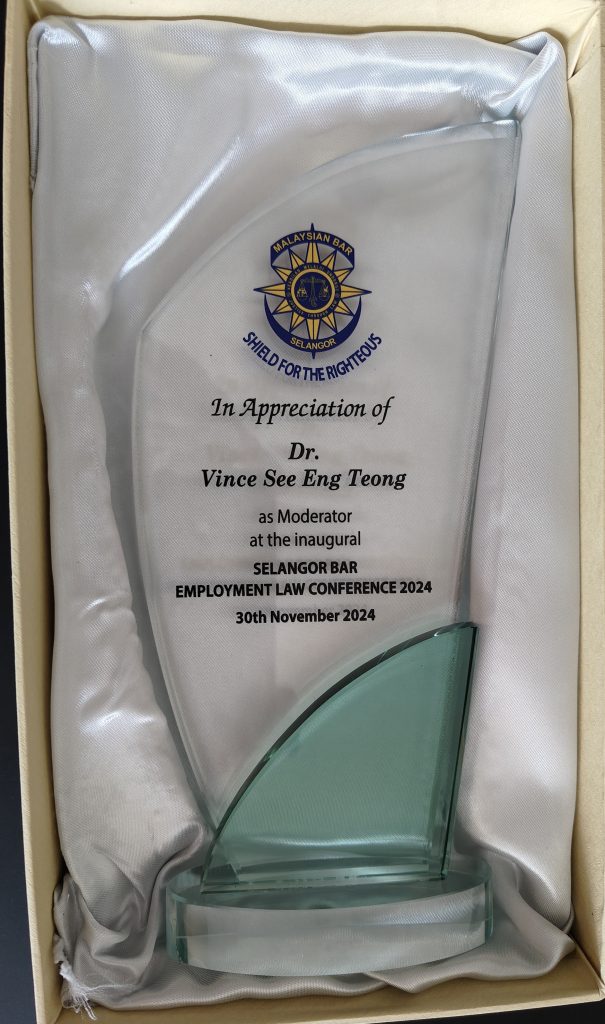
Dr. Vince moderated a session on Trade Union Laws at an Employment Law Conference

Employee’s Dismissal Compensation Reduced for “Secret” Audio Recording
In a claim for constructive dismissal by her employer, a former sales and marketing senior executive saw her compensation reduced by 35% by the Industrial Court.
The Industrial Court deducted RM26,500.00 from the employee’s award of compensation of RM75,000.00 after finding that her “secret” audio recording of a meeting held with her superiors to address several
grievances she had constituted a misconduct.
The employee’s constructive claim arose after her employer, as alleged, wrongfully deducted her salary for the months of October and November 2020 and imposed a revised salary and remuneration scheme that resulted in a permanent reduction of her wages. She gave a notice of constructive dismissal and filed her claim.
The Court found that the employer’s conduct in reducing her salary via a new salary scheme was unacceptable, and that, together with other acts, amounted to a case of dismissal without just cause or excuse.
One issue that arose from this case is, in what circumstances is an employee (and the employer, by analogy) permitted to record the proceedings in which the employer and employee discuss about the work performance of the employee (and possibly the remuneration to be granted by the employer). The case has effectively opened up another pandora’s box.
For more information about ETCoLaw’s Employment Law Practice, please click on Employment Law Practice.
If you have any employment issue, please do not hesitate to CONTACT ETCoLaw.
17 April 2023
Employment Benefits under Budget 2023 Announcement
The Social Security Organisation (SOCSO) will give to the private sector the following benefits:
- RM600 per month per employee for a period of 3 months for employers to employ Technical and Vocational Education Training (TVET) graduates
- Up to RM600 per month per employee for a period of 3 months for employers to employ disadvantaged people, such as disabled persons, ex-convicts, homeless people and unemployed persons
For more information about ETCoLaw’s Employment Law Practice, please click on Employment Law Practice.
If you have any employment issue, please do not hesitate to CONTACT ETCoLaw.
24 February 2023
Returning to Work Place is Considered Travelling to Work
In a landmark unanimous decision by the Court of Appeal recently, the court held that an employee who had been on his rest days and suffered injuries while travelling from his home town back to his work place the day before he was scheduled to resume working was deemed to be “travelling to work”. As such, the injuries suffered were an employment injury within section 24(1)(a) of the SOCSO Act 1969.
While the decision widens the scope of claims that an employee may make to the SOCSO, it does not seem to have any immediate impact on an employer. Overall, the decision appears to be a sensible and equitable decision.
For more information about ETCoLaw’s Employment Law Practice, please click on Employment Law Practice.
If you have any employment issue, please do not hesitate to CONTACT ETCoLaw.
21 September 2022
Postponement of the Implementation of Amendments to the Employment Act
The Minister in charge of human resources has just announced that the enforcement of the Employment (Amendment) Act 2022 which was scheduled to be enforced from 1 September 2022 will be deferred to 1 January 2023.
For more information about ETCoLaw’s Employment Law Practice, please click on Employment Law Practice.
If you have any employment issue, please do not hesitate to CONTACT ETCoLaw.
12 July 2022
Employee Flexible Working Arrangement
Employees will be able to apply to their employers for flexible working arrangements when the Employment (Amendment) Act 2022 comes into force on 1 September 2022.
The amendment allows the employees, among others, to apply for flexible hours of work, flexible days of work or flexible place of work. The employees may apply in writing to the employers in such form and manner as may be determined by the Director General, though no such form seems to be available yet.
The employer must within 60 days after receiving the application approve or refuse the application. The employer must give his reason in writing if there is a refusal.
The flexible working arrangement is nevertheless subject to the Employment Act, the contract of service, and any collective agreement in place.
For more information about ETCoLaw’s Employment Law Practice, please click on Employment Law Practice.
If you have any employment issue, please do not hesitate to CONTACT ETCoLaw.
12 July 2022